
Afromontane Research Group
PEOPLE
- Professor
- School of Biological Sciences
- ProfessorSchool of Biological Sciences
I lead research on the maintenance of biodiversity and ecosystem functioning at the University of Canterbury. My main objective is to contribute knowledge that will help restore degraded indigenous ecosystems. Specifically, I focus on the adaptation of exotic weeds and their interaction with native Aotearoa flora and fauna and on ecological processes related to the restoration and conservation of Afromontane forests.
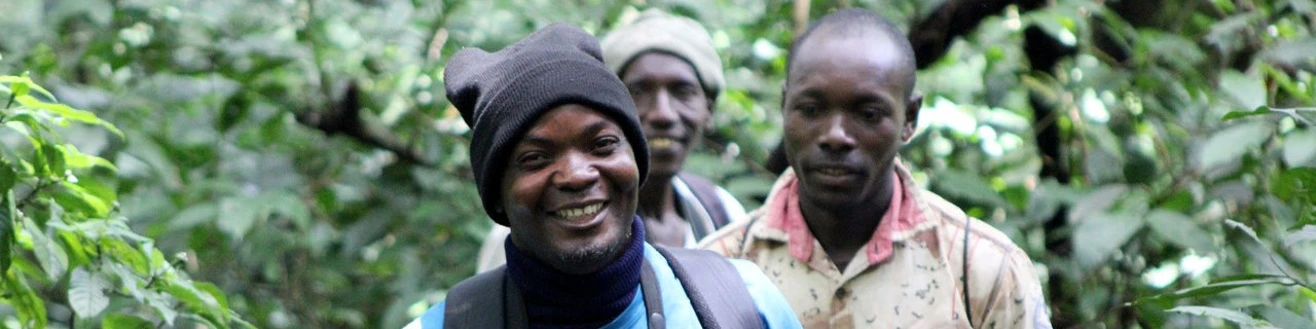
I have made a major contribution to West African montane forest ecology through the Founding of and leading the Nigerian Montane Forest Project (NMFP) .This research centre on the edge of a species -rich forest, surrounded by a fragile montane ecosystem serves as a base for a wide range of ecological investigations, ranging from ecosystem service provision to forest restoration. The NMFP is a significant conservation science hub in Nigeria and links in Nigerian forest conservation to an international network of forest research.
My interest in evolution within weedy species has led to considerable collaborations across NZ CRIs and internationally. My research group has answered questions around breeding systems and invasiveness, local rapid adaptation in weedy species and interactions between invasive species and native pollinators.
I am passionate about education and facilitating emerging leaders in their science careers- I have a special interest in increasing science capacity in Africa.I lead research on the maintenance of biodiversity and ecosystem functioning at the University of Canterbury. My main objective is to contribute knowledge that will help restore degraded indigenous ecosystems. Specifically, I focus on the adaptation of exotic weeds and their interaction with native Aotearoa flora and fauna and on ecological processes related to the restoration and conservation of Afromontane forests.
I have made a major contribution to West African montane forest ecology through the Founding of and leading the Nigerian Montane Forest Project (NMFP) .This research centre on the edge of a species -rich forest, surrounded by a fragile montane ecosystem serves as a base for a wide range of ecological investigations, ranging from ecosystem service provision to forest restoration. The NMFP is a significant conservation science hub in Nigeria and links in Nigerian forest conservation to an international network of forest research.
My interest in evolution within weedy species has led to considerable collaborations across NZ CRIs and internationally. My research group has answered questions around breeding systems and invasiveness, local rapid adaptation in weedy species and interactions between invasive species and native pollinators.
I am passionate about education and facilitating emerging leaders in their science careers- I have a special interest in increasing science capacity in Africa.- Faculty of Science
- Registered to supervise Master's/Doctoral students
- 4 Quality Education
- 5 Gender Equality
- 6 Clean Water and Sanitation
- 13 Climate Action
- 15 Life on Land
- 11 Sustainable Cities and Communities
- 1 No Poverty
- 10 Reduced Inequalities
- 2 Zero Hunger
- 8 Decent Work and Economic Growth
- 3 Good Health and Well Being
- Collaborative research projects
- Consulting & advisory services
- Industry partnerships & innovation
- Media enquiries
- Outreach & community engagement
- Policy advice & government consultation
Fields of Research- Agricultural, veterinary and food sciences
- Biological sciences
- Environmental sciences
- Ecology
- Evolutionary biology
- Plant biology
- Climate change impacts and adaptation
- Ecological applications
- Environmental management
- Horticultural crop protection (incl. pests, diseases and weeds)
- Community ecology (excl. invasive species ecology)
- Population ecology
- Evolutionary ecology
- Evolutionary impacts of climate change
- Plant physiology
- Ecological impacts of climate change and ecological adaptation
- Ecosystem function
- Ecosystem services (incl. pollination)
- Conservation and biodiversity
- Environmental rehabilitation and restoration
- Associate Professor
- Mathematics and Statistics
- Associate ProfessorMathematics and Statistics
My research centers on computational and applied statistics, with a strong emphasis on modern estimation techniques and uncertainty quantification. I am particularly interested in hierarchical and nonlinear modelling, model selection, and the translation of statistical methodology into robust, user-friendly software tools.
Alongside my research, my work as a statistical consultant is grounded in rigorous methodology and thoughtful computational implementation, ensuring that advanced statistical techniques are both practically applicable and scientifically sound.
My research centers on computational and applied statistics, with a strong emphasis on modern estimation techniques and uncertainty quantification. I am particularly interested in hierarchical and nonlinear modelling, model selection, and the translation of statistical methodology into robust, user-friendly software tools.
Alongside my research, my work as a statistical consultant is grounded in rigorous methodology and thoughtful computational implementation, ensuring that advanced statistical techniques are both practically applicable and scientifically sound.
- Faculty of Engineering
- Registered to supervise Master's/Doctoral students
- Collaborative research projects
- Consulting & advisory services
- Industry partnerships & innovation
Fields of Research- Statistics
- Applied statistics
- Biostatistics
- Lecturer
- School of Earth and Environment
- LecturerSchool of Earth and Environment
Dr Maia Raymundo is a conservation ecologist and Lecturer in the School of Earth and Environment at the University of Canterbury. Her research focuses on how ecological communities respond to environmental change, with particular emphasis on invasion ecology, restoration ecology, and community assembly across terrestrial ecosystems. She works at the interface of biodiversity conservation, species interactions, and ecosystem resilience, using field ecology, spatial analysis, and quantitative modelling to understand how anthropogenic pressures shape ecosystems.
Dr Maia Raymundo is a conservation ecologist and Lecturer in the School of Earth and Environment at the University of Canterbury. Her research focuses on how ecological communities respond to environmental change, with particular emphasis on invasion ecology, restoration ecology, and community assembly across terrestrial ecosystems. She works at the interface of biodiversity conservation, species interactions, and ecosystem resilience, using field ecology, spatial analysis, and quantitative modelling to understand how anthropogenic pressures shape ecosystems.
- Faculty of Science
- Registered to supervise Master's/Doctoral students
- 15 Life on Land
- 13 Climate Action
- 10 Reduced Inequalities
- 2 Zero Hunger
- Collaborative research projects
- Consulting & advisory services
- Industry partnerships & innovation
- Media enquiries
- Outreach & community engagement
Fields of Research- Ecology
- Community ecology (excl. invasive species ecology)
- Conservation and biodiversity
- Environmental rehabilitation and restoration
- Climate change impacts and adaptation
- Biological sciences
- Environmental sciences
- Earth sciences
- Ecological applications
- Plant biology
- Population ecology
- Terrestrial ecology
- Ecological impacts of climate change and ecological adaptation
- Ecosystem function
- Ecosystem services (incl. pollination)
- Landscape ecology
- Scientific Communication Spec
- School of Biological Sciences
- Scientific Communication SpecSchool of Biological Sciences
As the Scientific Communication Specialist in the School of Biological Sciences at the University of Canterbury, I work at the intersection of science, design, and education. My role involves helping students and staff communicate their research clearly and creatively—whether through visual design, scientific photography, posters, presentations, or technical figures. I draw on extensive experience in communication design to support research‑informed methods for sharing complex scientific ideas effectively and engagingly.
I also provide studio and location photography for publications, theses, and outreach, and I teach best‑practice approaches for remote, blended, and participatory learning environments. My background includes scientific illustration, information design, and taxonomic work on West African montane plants, and I’ve contributed to several virology and microbiology publications as part of multidisciplinary teams.
At UC, I’m driven by a passion for empowering researchers to tell their science stories in ways that are accurate, accessible, and visually compelling.
As the Scientific Communication Specialist in the School of Biological Sciences at the University of Canterbury, I work at the intersection of science, design, and education. My role involves helping students and staff communicate their research clearly and creatively—whether through visual design, scientific photography, posters, presentations, or technical figures. I draw on extensive experience in communication design to support research‑informed methods for sharing complex scientific ideas effectively and engagingly.
I also provide studio and location photography for publications, theses, and outreach, and I teach best‑practice approaches for remote, blended, and participatory learning environments. My background includes scientific illustration, information design, and taxonomic work on West African montane plants, and I’ve contributed to several virology and microbiology publications as part of multidisciplinary teams.
At UC, I’m driven by a passion for empowering researchers to tell their science stories in ways that are accurate, accessible, and visually compelling.
- Faculty of Science